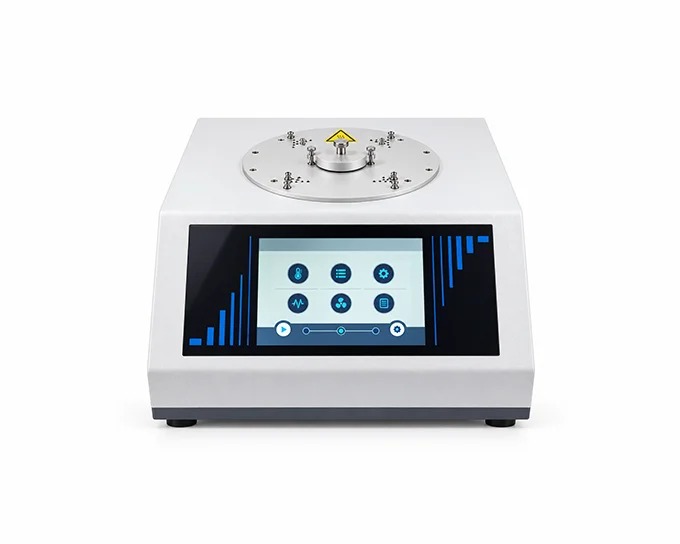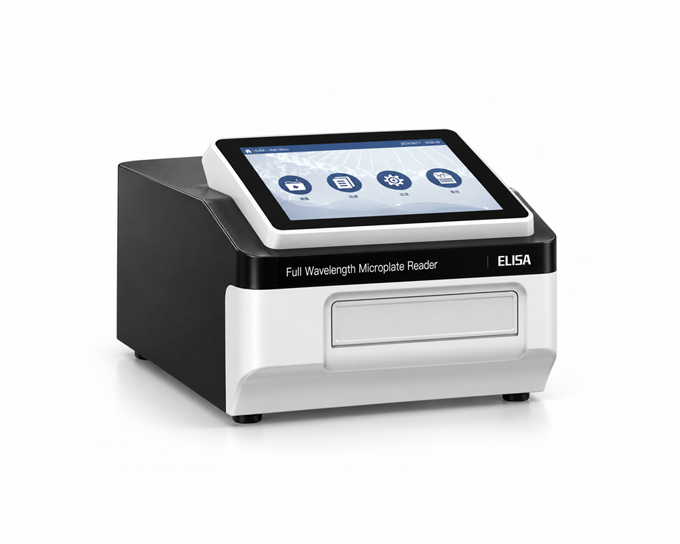
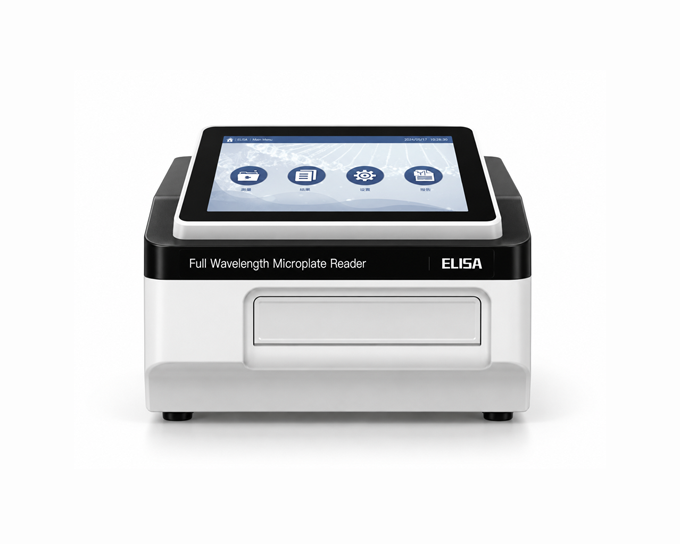
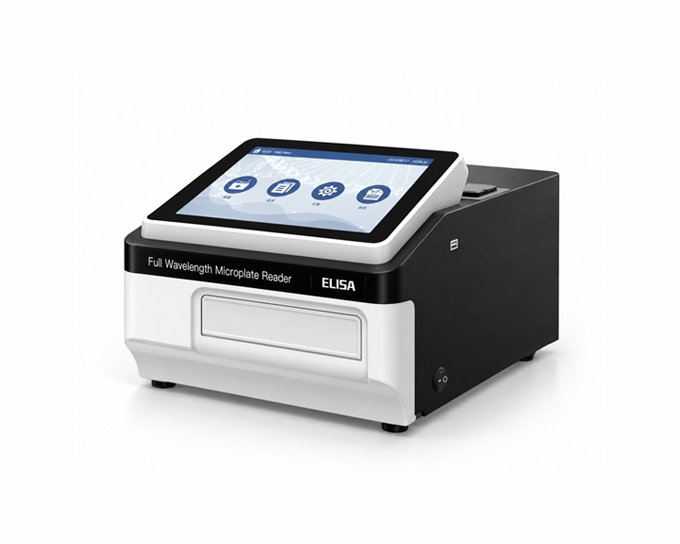
Product Overview
The microplate reader is an optical laboratory instrument based on the Beer–Lambert law. Primarily used for enzyme-linked immunosorbent assays (ELISA), it quantifies absorbance in samples on 96-well or 48-well microplates. Automated plate reading, curve fitting, data calculation, and report generation improve the efficiency of batch sample analysis.
Microplate readers are widely used in healthcare, disease control, food testing, animal husbandry, academic research, and independent testing laboratories. Multimode microplate readers can also offer fluorescence, chemiluminescence, and time-resolved fluorescence detection. Detection modes depend on the specific model and configuration.
Working Principle
Monochromatic light passes through the sample in each microplate well. The sample absorbs part of the light, and a photodetector converts the transmitted light into an electrical signal. After signal amplification and analog-to-digital conversion, the microprocessor calculates the optical density (OD). A calibration curve is used to determine sample concentration, supporting qualitative or quantitative analysis.
Key Features
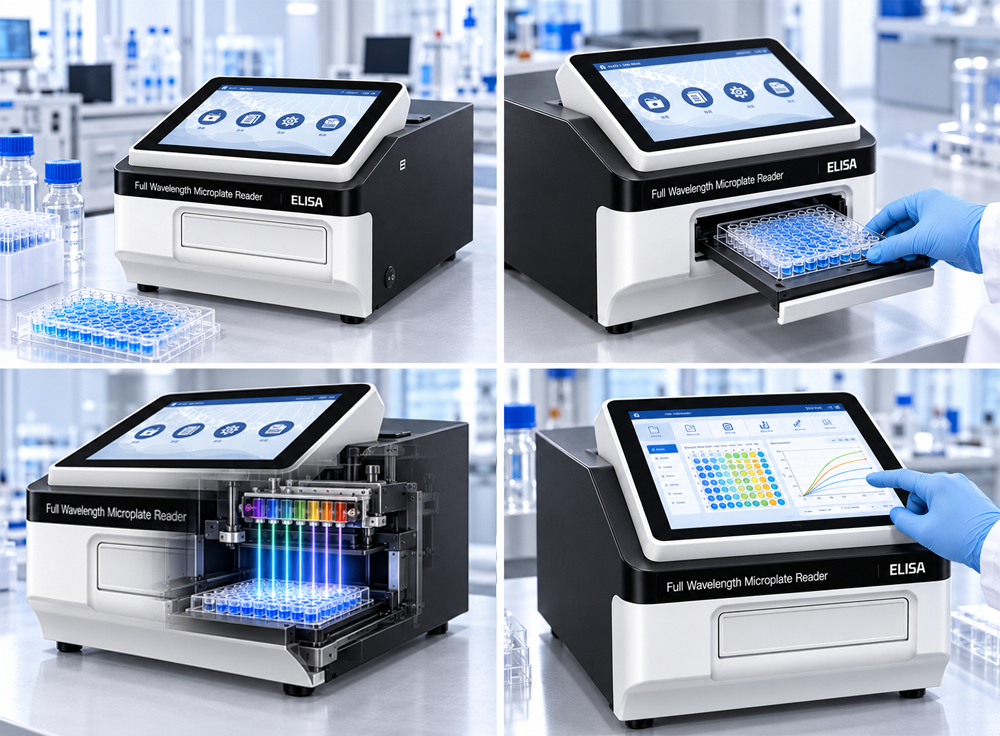
Applications

Model Selection Guide
| No. | Model | Key Specifications |
| 1 | JZ85HBS-1101 Microplate Reader | 7-inch LCD; wavelength range: 400–1000 nm; temperature control option not available. |
| 2 | JZ85HBS-1102 Microplate Reader | 7-inch LCD; wavelength range: 340–1100 nm; temperature control option not available. |
| 3 | JZ85HBS-1096A Microplate Reader | 8-inch LCD; improved reading range, linear range, repeatability, and stability compared with JZ85HBS-1101; optional temperature control system. |
| 4 | JZ85HBS-1096B Microplate Reader | No built-in display; requires connection to a computer. |
| 5 | JZ85HBS-4009 Automatic Microplate Washer | 8- or 12-needle wash head; one channel supplied as standard. |
| 6 | JZ85HBS-ScanA Full-Wavelength Microplate Reader | Wavelength range: 330–1000 nm. |
| 7 | JZ85HBS-ScanB Full-Wavelength Microplate Reader | Wavelength range: 190–1000 nm. |