Key application guidelines, contamination controls, safety practices and maintenance considerations
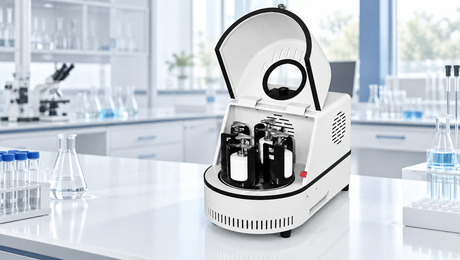
Sample pulverizers are essential laboratory sample-preparation instruments used in geology, metallurgy, coal, building materials, chemicals and environmental testing. They reduce solid samples to the particle size required for chemical analysis or instrumental testing. Because pulverization quality directly affects analytical accuracy and reliability, every stage of the process must be carefully controlled.
Equipment Selection and Configuration
Correct equipment selection is the foundation of reliable sample preparation. The pulverizer should be chosen according to sample hardness, brittleness, moisture content and corrosiveness, as well as the required throughput, target particle size and downstream analytical method. Common equipment includes jaw crushers, disc pulverizers, vibration mills and ball mills.
Hard materials such as ores and rocks are normally reduced first with a jaw crusher and then finely ground with a disc pulverizer. For fine grinding of small sample quantities, a vibration mill is often more efficient. Grinding components should be selected from wear-resistant materials such as high-manganese steel, tungsten carbide or agate to minimize wear-related contamination and analytical interference.
Sample Pretreatment
Particle-Size Control and Sample Uniformity
Particle size is a critical indicator of sample-preparation quality. Requirements vary by analytical method: chemical analysis commonly requires material passing a 100-200 mesh screen, while X-ray fluorescence analysis may require a finer powder. Use staged size reduction with appropriate screening to avoid both insufficient grinding and overgrinding.
Overgrinding can increase oxidation, moisture absorption and component segregation, particularly in samples containing sulfides or readily oxidized elements. After grinding, mix the sample thoroughly and reduce it using coning and quartering or a sample divider to obtain a representative test portion. Fine powders have a larger surface area and readily adsorb moisture and gases from the air, so they should be sealed promptly after preparation.
Preventing Cross-Contamination
Cross-contamination is a major source of analytical error in laboratories handling different sample types. After each sample, thoroughly clean the grinding chamber, grinding media and screens. Use a brush or compressed air; where necessary, pre-grind a small portion of the next sample as a conditioning or flushing step and discard it.
Dedicated equipment or a strict cleaning procedure is recommended for trace-element analysis or samples with significantly different compositions. Inspect screens regularly and replace damaged screens immediately. Wear particles from the grinding media can also contaminate samples, so select the grinding material according to the elements being analyzed.
Safe Operating Practices
Confirm that the machine is properly grounded, all fasteners are secure and every protective guard is correctly installed.
Never open a protective cover or place a hand inside the feed inlet while the machine is running. Use the designated feeding tool rather than feeding material by hand.
Place the machine on a firm, level foundation. Add vibration-isolation pads when necessary to protect nearby precision instruments.
For dusty operations, use a fume hood or dust-extraction system. Wear a suitable dust mask or respirator, safety glasses and gloves. Samples containing volatile or toxic substances require adequate ventilation and appropriate personal protection.
Maintenance and Care
- Clean the inside and outside of the machine after every use and keep it dry to prevent residual material from corroding components.
- Regularly inspect jaw plates, grinding discs, balls and other grinding parts;
- replace them when wear could affect efficiency or particle-size distribution.
- Lubricate transmission components according to the operating manual and stop the machine for inspection if bearing temperature rises abnormally.
- Keep electrical components dry and inspect wiring and switches periodically.
- Before long-term storage, clean the equipment, apply rust-preventive oil where appropriate and cover the machine.
- Maintain an equipment log recording operating condition, maintenance, repairs and replacement parts.
Common Problems and Corrective Actions
Check for oversized feed, excessive sample moisture, worn grinding components or insufficient operating speed.
Increase grinding time where appropriate, clear blocked screens and improve sample mixing.
For sugar-rich, oily or wet samples, consider low-temperature drying, intermittent grinding or a compatible grinding aid such as absolute ethanol, provided it will not interfere with the analysis.
Stop the machine immediately and inspect for loose fasteners, damaged bearings or uneven feeding.
Conclusion
Sample pulverizers play a decisive role in laboratory sample preparation, and the quality of their operation directly affects the reliability of analytical results. Laboratories should manage the complete workflow—from equipment selection and sample pretreatment to particle-size control, contamination prevention, safe operation and maintenance—in accordance with approved procedures and applicable standards, including the GB/T 14506 series and relevant ISO sample-preparation standards. A controlled and continuously optimized process provides accurate, reliable and representative samples for downstream analysis.